


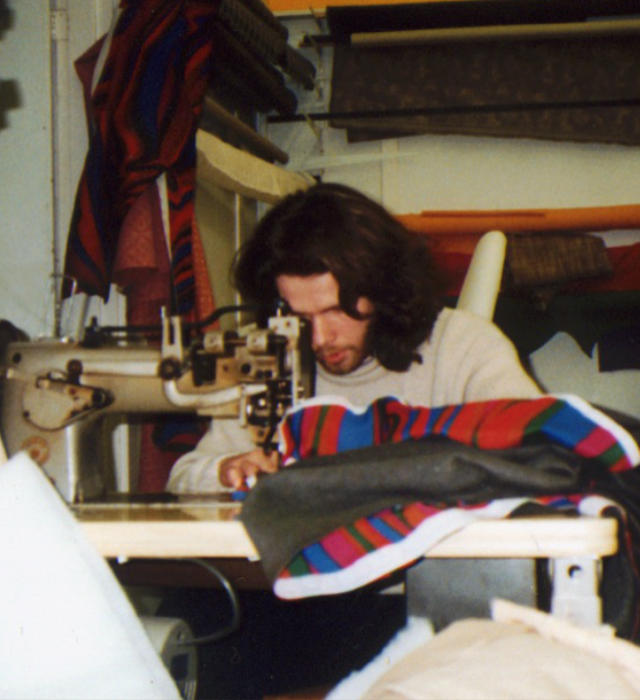
How it started
In 1995, Dennis van der Burch founded his “upholstery atelier for design furniture”.
While still employed, he was often told that he made the work “too beautiful” and that “we don’t get paid for that level of finish.”
When he eventually started his own upholstery workshop, he began looking for a clientele that matched his way of working. Expecting design furniture to become the antiques of the future, he fully dedicated himself to the restoration of modern classics and started building a collection of moulds, allowing successful work to be repeated with consistency.
Despite colleagues asking, “What does an upholsterer need a website for?” he also began documenting his progress in a blog under the URL meubelstoffeerderij.nl.
The first vintageshops
The first clients included collectors and the owners of the very small number of vintage shops the Netherlands had at the time. It was a collaboration that proved highly fruitful, both for the clients and for the young entrepreneur.
The collection of moulds grew steadily, as did the online photo archive of previously completed work.
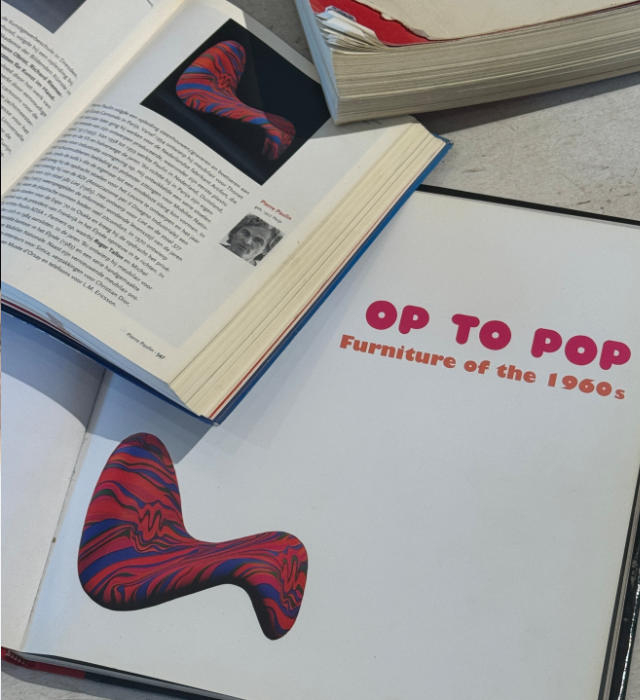
One example is Pierre Paulin’s Tongue, upholstered by Dennis at the time in a 30-year-old jersey fabric by Jack Lenor Larsen. After the owner of the piece later sold it at auction, the chair appeared in various books and reference works on modern design.
'The design upholsterer'
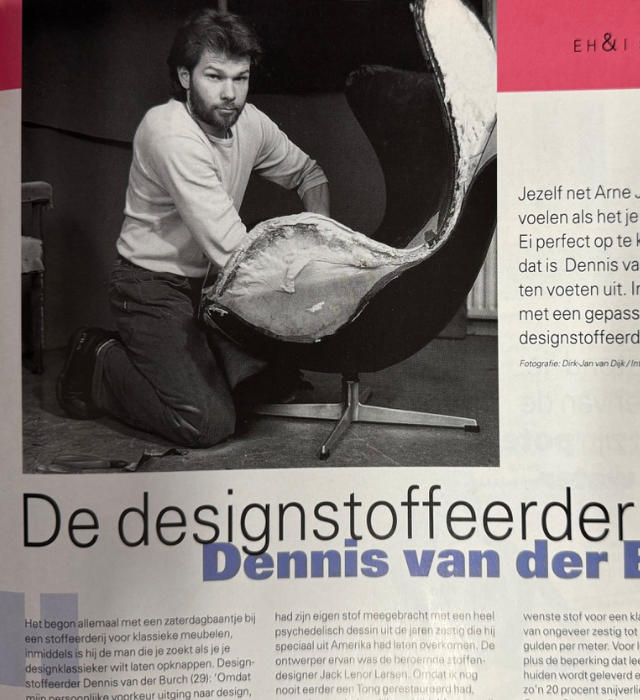
In 2000, the first articles about Dennis’s work began to appear. The first was published in Eigen Huis & Interieur under the headline “The Design Upholsterer.”
Following the article in EH&I, more interviews appeared in magazines such as Elle Wonen, Residence, Elsevier, and in various newspapers.
The foundation had been laid — and the agenda started filling up. 🥳
Tecno
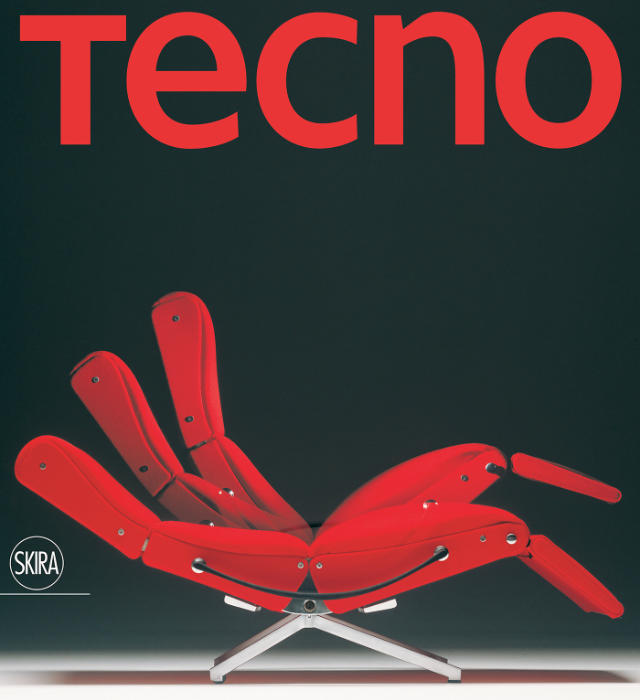
In 2001, Meubelstoffeerderij.nl began working with its first manufacturer: Osvaldo Borsani’s Tecno Spa.
This allowed us to serve collectors and enthusiasts even better, by supplying original parts for classics such as the Tecno P40 and D70. In those years, the silhouette of the P40 also became the visual trademark of our company.
Cassina
After our collaboration with Tecno Spa as a dealer for upholstery and accessories, Cassina followed in 2004.
Their collection included many designs we already knew and loved: the LC2 and LC4 by Le Corbusier, the Veranda and Maralunga by Vico Magistretti, the AEO by Archizoom, the MET by Piero Lissoni, and of course the Utrecht by our own Gerrit T. Rietveld.
vitra.
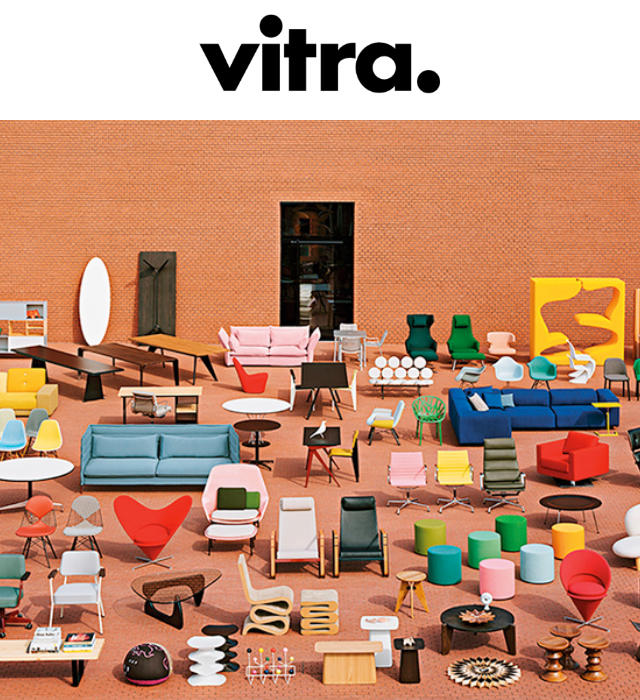
In 2006, Meubelstoffeerderij.nl became Vitra’s service partner in the Netherlands.
Cassina’s collection is filled with classics, but when it comes to its contribution to European design, Vitra has undeniably had a major influence.
Alongside the work of Charles & Ray Eames, Vitra’s collection includes designs by Verner Panton, Eero Saarinen, George Nelson and many others. Even after all these years, it remains a collection we are very pleased to make our modest contribution to.
Our fourth move
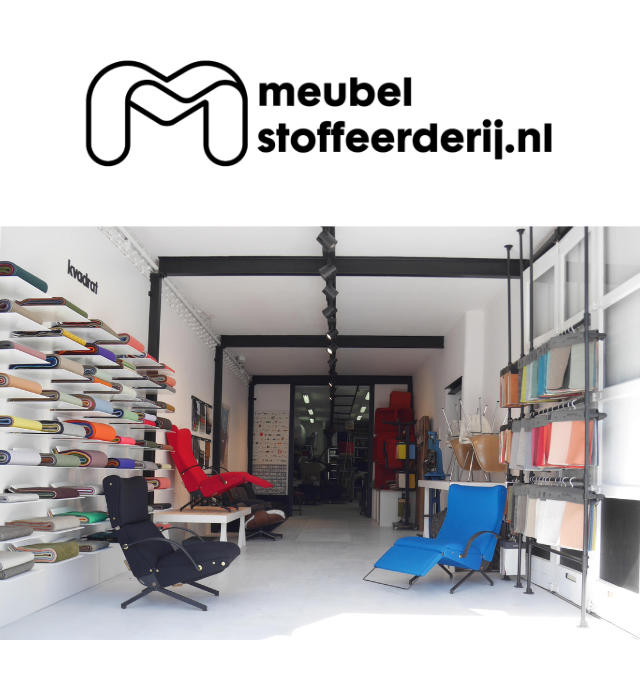
In 2017, after three previous locations, we moved into our current atelier at Veenkade 69.
A wonderful place where, during the summer months, we can slide open the entire front facade — and where we work every day with great pleasure on what drives us: restore, repair, reupholster.
Working towards a sustainable future, one piece of furniture at a time.
B&B Italia
In 2020, Meubelstoffeerderij.nl became B&B Italia’s service partner in the Netherlands.
Today, this means taking care of reupholstery, maintenance and spare parts for B&B Italia. As a service partner, we work according to the manufacturer’s standards and with original materials, helping to preserve comfort, appearance and value.

Cassina online partner
After years of experience restoring Cassina classics and supplying original spare parts, the next step felt inevitable.
Thanks to the success of our spare parts sales and our in-depth knowledge of each design, Cassina asked us to also offer a selection of new furniture.
A new chapter begins: Meubelstoffeerderij.nl becomes the first restorer in Europe to be officially selected as an online sales partner.
Bringing every aspect together — from restoration to origin.
